
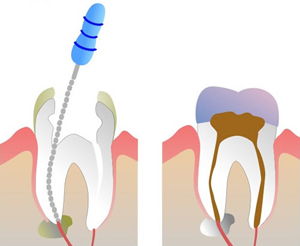
 A throbbing toothache, lingering sensitivity to hot or cold, or a swollen gum near one tooth can all be signs that the nerve inside the tooth is inflamed or infected. Root canal treatment removes that damaged tissue, relieves the pain, and lets you keep your natural tooth instead of losing it. For patients in Marietta and East Cobb, it is often the best way to save a tooth that would otherwise need to be pulled.
Both Dr. Michael S. Mansouri, DMD, FAGD, and Dr. Azita A. Mansouri, DMD, perform root canal treatment in our office. Because comfort matters so much with this procedure, it is worth knowing that both doctors are members of the American Dental Society of Anesthesiology, and Dr. Michael has completed additional training in oral and IV sedation. Dr. Michael is also a member of the American Academy of Oral Medicine and has earned Fellowship in the Academy of General Dentistry.
What Is a Root Canal?
Inside every tooth is a soft core called the pulp, which contains nerves and blood vessels. Deep decay, a crack, or an injury can allow bacteria to reach the pulp, causing inflammation or infection. During a root canal, the damaged pulp is removed, the inside of the tooth is cleaned and disinfected, and the canals are filled and sealed. Most back teeth then need a crown to protect them from breaking.
Without treatment, an infected tooth can form an abscess, and the infection can spread to the surrounding bone and, in rare cases, beyond the jaw.
Most patients are surprised by how much better they feel after a root canal. The pain they came in with was from the infection, and the treatment is what finally relieves it.
Signs You May Need a Root Canal
- Persistent toothache: Pain that throbs, lingers, or wakes you at night.
- Lingering sensitivity: Hot or cold sensitivity that lasts after the food or drink is gone.
- Pain when biting: Tenderness when chewing or touching the tooth.
- Swollen or tender gums: Swelling, or a pimple-like bump on the gum near the tooth.
- Tooth darkening: A tooth that turns gray or darker after an injury.
Some infected teeth cause no pain at all and are found on X-rays during a routine visit, which is one reason regular checkups matter.
What to Expect During Root Canal Treatment in Marietta
- Diagnosis: We examine the tooth, take X-rays, and test how it responds to confirm whether a root canal is needed.
- Numbing and comfort: The area is fully numbed with local anesthetic. Sedation options are available for anxious patients.
- Cleaning the canals: A small opening is made in the tooth, and the damaged pulp is removed. The canals are cleaned, shaped, and disinfected.
- Sealing: The canals are filled and sealed, and a temporary or permanent filling closes the opening.
- Protecting the tooth: A crown is often placed at a later visit to restore strength.
Mild tenderness for a few days is normal and usually responds to over-the-counter pain relievers. Avoid chewing hard foods on the tooth until it has its final restoration. Call our office if swelling develops or pain worsens after a few days. If you have facial swelling with fever, or swelling that affects your eye, breathing, or swallowing, go to the nearest emergency room.
Frequently Asked Questions About Root Canals
With modern anesthesia, most patients say a root canal feels similar to getting a filling. The procedure is designed to relieve the pain caused by infection. Some tenderness for a few days afterward is common. Read more in Is a Root Canal Painful?
Many root canals are completed in one visit of about one to two hours, though teeth with several canals or a significant infection may need a second appointment.
Back teeth usually need a crown after a root canal because they handle heavy chewing forces and can become brittle. Front teeth may sometimes be restored with a filling instead. Your dentist will recommend the best option.
An untreated infection can spread, cause an abscess, and lead to more pain, bone loss, or losing the tooth. Learn more in What Happens if You Delay Getting a Root Canal?
Saving your natural tooth is usually preferable when it can be restored. If a tooth is extracted, it should be replaced with an implant, bridge, or partial to prevent shifting and bite problems, which often costs more over time.
Antibiotics alone cannot cure an infected tooth because the source of infection remains inside. They may be prescribed when infection has spread or swelling is present, but the tooth still needs treatment.
Why Choose Mansouri Family Dental Care for Root Canal Treatment
- Two Experienced Dentists: Both Dr. Michael and Dr. Azita Mansouri perform root canal treatment.
- Focus on Comfort: Both doctors are members of the American Dental Society of Anesthesiology.
- Sedation Options: Nitrous oxide, oral sedation, and IV sedation are available.
- Complete Care in One Office: Your root canal and protective crown can be completed by the same team.
- Prompt Attention for Pain: We make every effort to see patients with dental pain quickly.
- Insurance Help: Our team checks your benefits and explains costs before treatment.
Schedule Root Canal Treatment in Marietta
If you have a toothache or a tooth that is sensitive, swollen, or darkening, do not wait for it to get worse. Our dentists will find the cause, explain your options, and help you get relief. Contact our office on Lower Roswell Road to schedule an appointment.
Medically reviewed by Azita Agharahimi Mansouri, D.M.D. on